
Money Mindset: The Beliefs You Were Handed Before You Could Count
Your money mindset is a set of beliefs absorbed in childhood that runs on autopilot. Here is why willpower can’t shift it, and what actually does.
Money Mindset: The Beliefs You Were Handed Before You Could Count

By the time a child turns seven, the mental groundwork for how they will handle money as an adult has largely been laid. That is the thrust of a 2013 study by researchers at the University of Cambridge for the UK's Money Advice Service: the traits behind every financial decision an adult makes — self-control, the ability to plan ahead, the willingness to wait for a larger reward — are mostly formed before a child has done long division.
So when someone says they "just can't stick to a budget", they are usually not failing at arithmetic. They are running a program written years earlier, mostly by people who were not trying to teach them anything about money at all: a parent who went quiet whenever a bill arrived, a grandparent who kept cash in a tin, a household where money was either never discussed or never stopped being discussed.
That program has a name. Your money mindset is the set of beliefs and automatic reactions you bring to earning, spending, saving and risk. Most of it runs without you noticing, and most of it is older than your first bank account.
None of this is a new or radical claim. Some version of it has been in print for sixty years, and the research has simply caught up and put numbers on it. It is worth walking through why your money mindset holds the shape it does, because the practical consequence is large: most money advice fails because it is aimed at the wrong part of you.
What a Money Mindset Actually Is
The financial psychologist Brad Klontz gave these beliefs a useful label: money scripts. In his research, most people run one of four:
- Money avoidance: money is faintly bad, rich people are suspect, and you don't really deserve more. This one quietly sabotages pay rises and savings alike.
- Money worship: more money would fix everything, and there is never enough. Leads to overwork, overspending, and debt in service of the next thing.
- Money status: what you own is what you are worth. The car, the postcode, the round of drinks.
- Money vigilance: watchful, private, a little anxious about it. The healthiest of the four, and even it has a cost, because vigilance taken too far means never actually enjoying anything.
The point that matters for you: in Klontz's data, three of the four scripts tracked with income and net worth. Not with intelligence. Not with financial literacy. With a belief you were handed before you could read.
People Have Been Saying This Since 1963

Long before brain imaging or a phrase like "money script", an Irish-born minister named Joseph Murphy was making the same argument to anyone who would listen. His 1963 book The Power of Your Subconscious Mind has sold millions of copies and has never been out of print. Its core claim: the subconscious does not weigh evidence the way the conscious mind does. It accepts what it is told often enough — about money, about worth, about what is possible for someone like you — and then works quietly to make that true.
In his day this was filed under mysticism. What is striking is how well it has aged. Strip out the period language and Murphy was describing what we would now call a money mindset: what the Cambridge researchers later measured and what Klontz catalogued — a set of money beliefs, absorbed early, running automatically, shaping outcomes regardless of how clever or well-informed the person is. He had the shape of it decades before anyone could test it.
Where Murphy stopped is the part this article is about. He thought the fix was to feed the subconscious better inputs: affirmations, visualisation, repetition. That is half an answer. Affirmations are only words, and the subconscious updates on evidence. The most persuasive evidence about your money is your money.
Why Willpower Is the Wrong Tool
Here is the mistake almost every money guide makes. It treats a money mindset as a discipline problem, and prescribes more discipline: a stricter budget, a spending fast, a rule about coffee. That is like trying to fix a limp by concentrating harder on walking.
A money script runs automatically, in the half-second before you have consciously decided anything. By the time the "should I?" arrives, the script has already answered. You can override it with effort, the way you can hold your breath, but not for long, and not while you are also living your life. Every budget that collapses in month three collapses for the same reason: a conscious rule fighting an unconscious habit that had a thirty-year head start.
The good news is in the same research. A money mindset is learned — absorbed from repeated evidence about what money meant in the house you grew up in. Which means it can be un-learned the same way: with new evidence, repeated, about what your choices actually cost you now.
The One Thing That Rewrites a Money Mindset
A belief changes when reality contradicts it often enough that holding on to it becomes embarrassing. "I don't spend much on takeaways" survives every vague resolution and dies the moment you see the twelve-month total on one line. "A holiday like that isn't for people like us" survives right up until your own numbers show that three months of an unwatched subscription habit would have paid for it.
That is the mechanism, and it is the only one that reliably works: not shame, not a lecture, not a budget, but the real consequences of your choices put in front of you in a form your brain can't argue with, month after month, until the money mindset updates on its own.
The Modern Version of the Same Idea
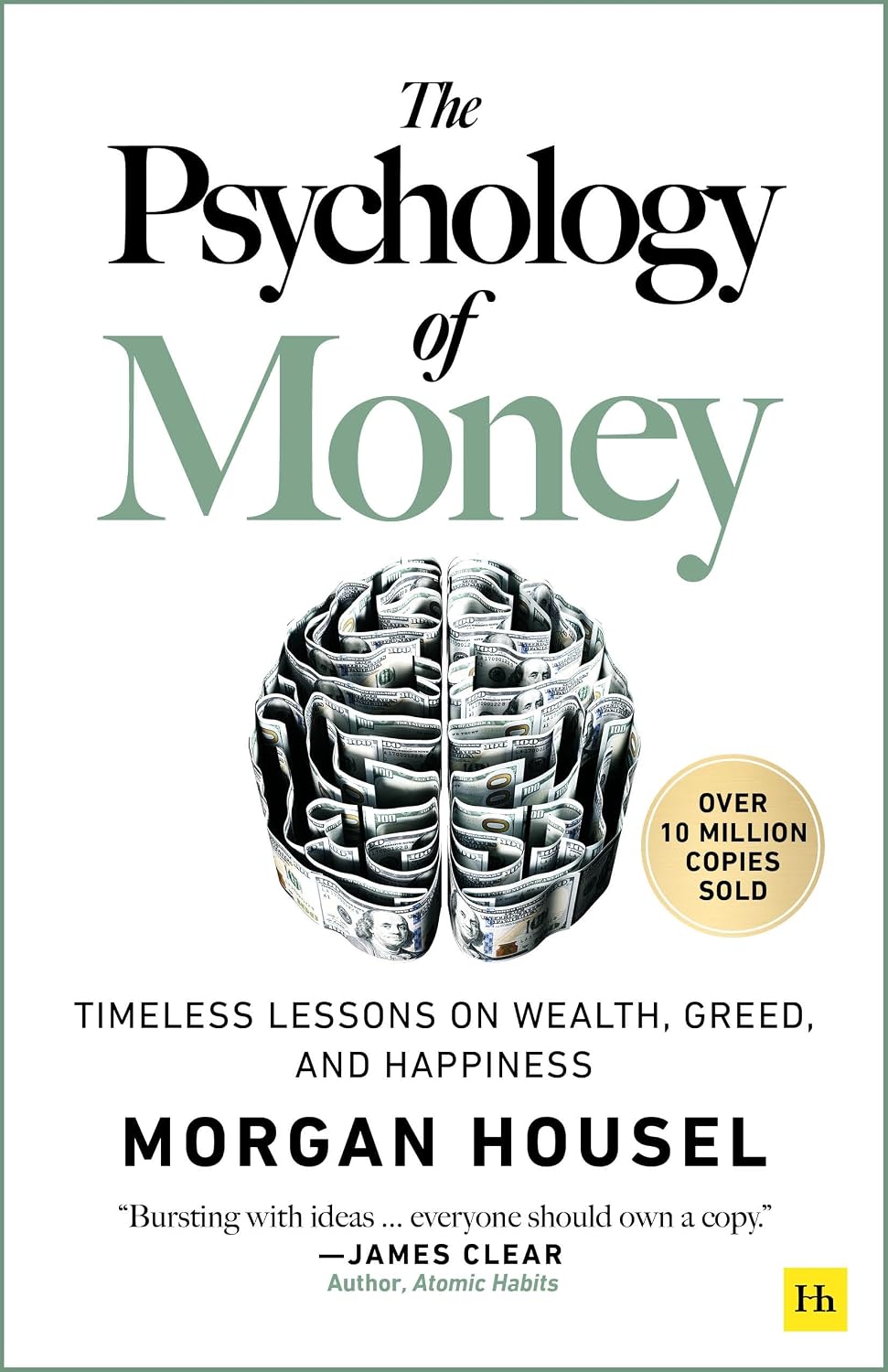
If Murphy is the old proof, Morgan Housel is the current one. His book, The Psychology of Money, has sold more than ten million copies for one reason: it argued, carefully and with evidence, that doing well with money is mostly about behavior rather than intelligence or math — and millions of readers recognized themselves in it. That is the claim Murphy made in 1963 and the one the Cambridge study measured in 2013. Three eras, three vocabularies, one conclusion: your money mindset, not your math, is the thing to work on.
We are not going to make that case better than Housel does, so we will just say it plainly: read The Psychology of Money. It will change how you think about money in general, and we have set out where its argument and a cash flow view meet.
The one thing a book cannot do is change what you believe about your money. You finish it motivated, and next month still looks like last month, because the evidence your mind is acting on never changed. The book is the argument. Your own numbers are where the argument lands.
Where Your Own Numbers Come In
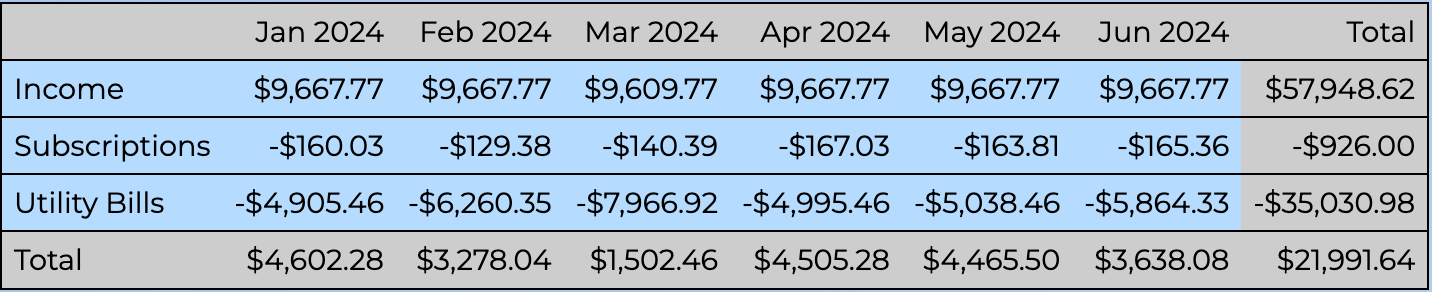
All of this points at one practical step. If a script only updates against repeated, specific evidence, you need somewhere the evidence lives: your real income and spending, grouped so the patterns are obvious, brought up to date every month whether you look or not.
That is what Where Does My Money Go is built to be. You bring in your transactions and answer a short run of questions about your own spending — answering them is itself how the pattern comes into focus. The cash flow table then shows what you are actually choosing, month after month: not a target, not a verdict, just the picture your money mindset has been filling in for you without your say-so.
Money Mindset: Common Questions
What is a money mindset?
The set of automatic beliefs and reactions you bring to money: whether spending feels like loss or control, whether saving feels safe or restrictive, whether wealth is something for people like you. Most of it is learned in childhood and runs without your noticing.
Is "money mindset" just self-help repackaged?
The phrasing is newer than the idea. Joseph Murphy was writing about subconscious money beliefs in 1963; the University of Cambridge measured the underlying traits in 2013; Brad Klontz mapped them to income and net worth; Morgan Housel made the behavioural case to millions of readers. The consistent finding across all of it is that beliefs absorbed early, not intelligence or literacy, drive most financial outcomes.
Can you actually change a money mindset?
Yes, but not with willpower or affirmations. A money script is a belief built from repeated evidence, and it changes when it meets repeated contradicting evidence: an accurate, monthly picture of what your choices actually cost and return.
How long does it take?
There is no fixed number. The mechanism is repetition, the same as forming any habit. Most people notice their default questions changing, from "can I afford this?" to "does this fit what I'm trying to do?", within a few monthly review cycles.
Further Reading
 BlogFamous People Who Went Broke, and the Money Lesson They MissedFamous people who went broke after earning millions, and two who got rich on ordinary wages. The lesson they all point to has nothing to do with income.Read article
 BlogHow to Manage Your Money with a Cash Flow ViewUnsure how to manage your money? Start with a plan for the life you want, then use a cash flow view to keep score.Read article
 SolutionBudgeting Without the Guilt TripUnderstand what you can and can't afford, and work within those limits without the guilt over every cup of coffee.Explore solution
Disclaimer: We are not financial advisers. The information on this website is general in nature and does not take into account your individual circumstances. You should seek independent professional advice before making financial decisions.