The Tax-Time Spreadsheet That Became This App
A founder story about turning a painful tax-time spreadsheet into a clearer way to understand cash flow, spending, and better decisions without guilt budgeting.

By Patrick, Founder
The Tax-Time Spreadsheet That Became This App

I didn’t plan to write a personal finance app. If I’m honest, I didn’t plan to write any
software at all at that point in my life. I’d already spent decades working for banks in London and
Sydney, building software systems for other people, for teams who needed things to work reliably,
quietly, and at scale. This started in a much more ordinary way with a task I’d been putting off and a
growing sense of irritation.
It was tax time. I was sitting at my desk, bank statements open, trying to make sure I hadn’t missed
anything I was legally entitled to claim. The rules weren’t the problem. The volume of information was.
I found myself scrolling up and down, cross checking dates, second guessing whether I’d already looked
at something. It felt inefficient in a way that bothered me more than it probably should have.
Eventually, I did what I’d done many times before in my career when a system got in the way: I pulled
the data out and put it somewhere I could work with it. I exported my transactions into Excel. At first,
it was purely tactical, a way to search, filter, and highlight what I needed, so I could finish the job
and move on.
But something happened as I worked through the list. Seeing every transaction laid out in front of me,
stripped of the bank’s presentation, I started noticing patterns. There were recurring payments I barely
remembered signing up for. Subscriptions that felt insignificant month to month suddenly looked
different when I saw them repeated over and over again. It wasn’t dramatic, but it was unsettling. The
data was quietly telling a story I hadn’t been listening to.
Once that door opened, curiosity took over. I started categorizing income and expenses, not with the
intention of budgeting, but with the intention of understanding. I’ve always been entrepreneurial by
nature; side projects, investments, ideas in motion, and money had never scared me. What I realized,
though, was that I’d never actually seen everything clearly at once. Not properly. Not in a way that
allowed reflection rather than reaction.
As I spent time with the data, the better decisions became obvious. They weren’t about sacrifice. They
were about alignment. Spending money on things that genuinely added value to my life, and quietly
letting go of the things that didn’t. Over time, that clarity changed how I felt about money. I wasn’t
checking balances anxiously or avoiding decisions. I felt calmer. More deliberate.
Friends started noticing before I did. Comments like “you always seem to be doing things” or “how do you
afford that?” came up casually. When I explained that it wasn’t about earning more, but about
understanding my cash flow and total costs, a few of them asked if they could use what I was using. That
question stayed with me. I realized I wasn’t just solving a problem for myself, I’d stumbled into
something others were missing too.
I’d tried plenty of personal finance tools over the years, but none of them ever stuck. In practice,
they all felt like variations on the same theme: track a budget, monitor spending, feel guilty, repeat.
The underlying message always seemed to be that managing money meant shrinking your life. That never
resonated with me. I didn’t want software that told me to say no. I wanted software that helped me say
yes and confidently, and without surprises.
That perspective came directly from my career. I spent 30 years in banking, writing software and
managing teams delivering systems for internal users. I saw how finance professionals think about money.
They don’t obsess over individual transactions. They look at cash flow, trends, time horizons, and
trade offs. The irony was that personal finance software rarely borrowed from those proven approaches.
Instead, it simplified them away.
From the beginning, I made a decision I never compromised on: don’t disguise the facts.
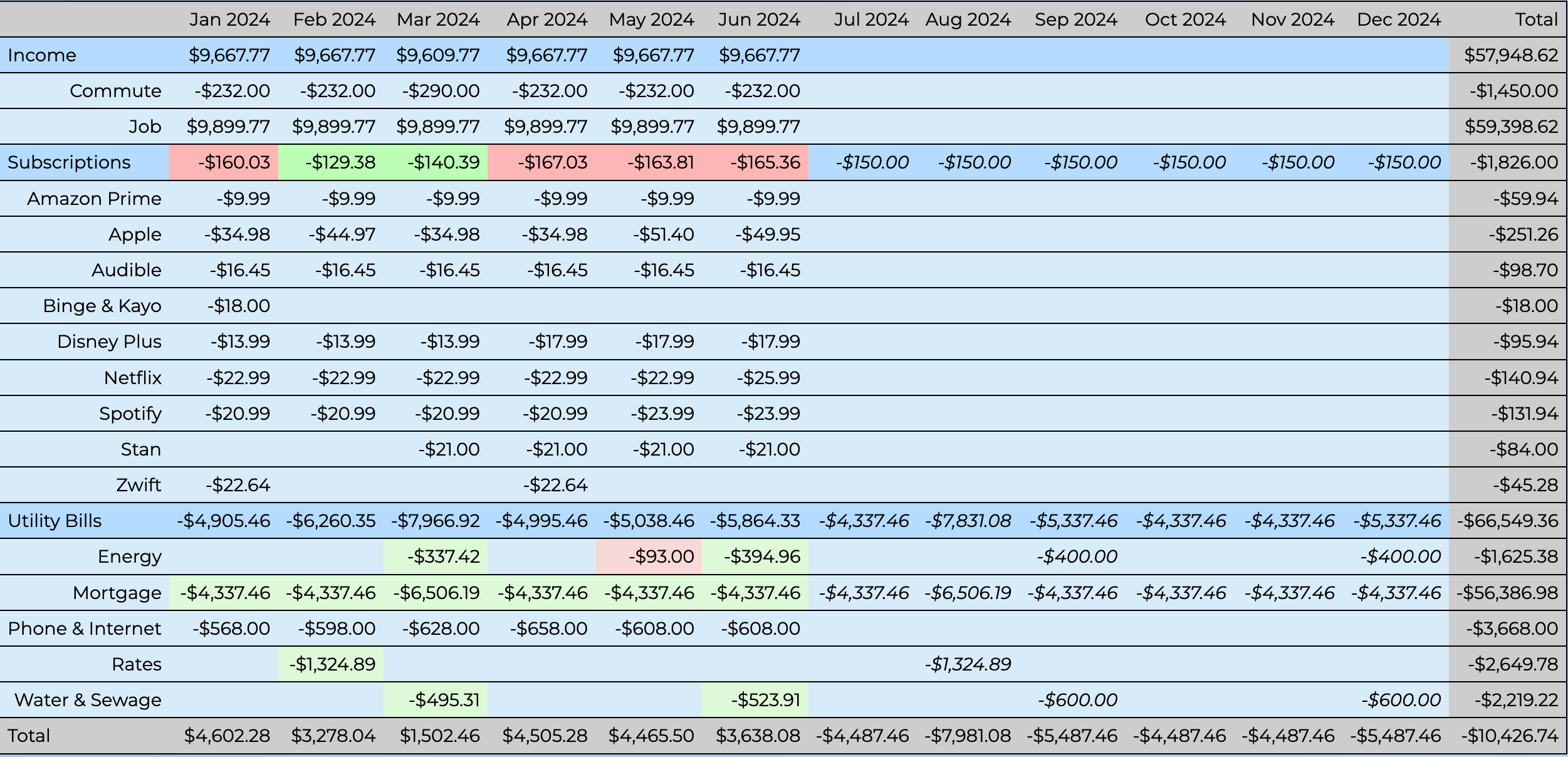
With a cash flow table, you can change categories, you can explore different scenarios, but the totals
must always remain true. That belief became the backbone of everything. No matter how you view your
finances, reality doesn’t change and that’s a good thing. Once people can see the truth clearly, they
don’t need to be instructed. They start thinking differently on their own.
I made mistakes along the way. Early versions focused too heavily on budgets, and something felt off.
Budgets assume a single future, a single plan. Life doesn’t work that way. Once I allowed multiple
budgets and scenarios, everything clicked. Being able to see twelve months of financial activity at
once, then drill down only when something mattered, gave people space to think rather than react. It
turned money management into a reflective process instead of a defensive one.
Time mattered to me as well. I didn’t want this to become a daily chore.
These days it’s closer to an hour or two a month — importing, checking things
match, glancing at where I stand. Anything more meant the system was failing. What surprised me was how much
insight that small amount of time produced. That balance of minimal effort and meaningful clarity is a
big reason this works for people who want control
without obsession.
The biggest shift it created for me wasn’t in monitoring costs, but in mindset. I stopped focusing on
upfront costs and started understanding total cost (or return) over time. One example still makes me
smile. I once bought a brand new LandCruiser, a big V8 gas guzzler that many would assume was financial
madness, and kept it for seven years. Later, I bought a second hand BMW X1 and kept it for two. Because
I had the data, I know exactly which one cost me less overall and per year. More importantly, I
understand why, and how satisfied I was with each decision. That lesson was personal, not generic, and
it stayed with me.
Not everyone wants this level of clarity. Some people only engage with their finances too late only when
something goes wrong. Others are proactive, and many of them already have elaborate spreadsheets trying
to do the same thing. For them, this website is about having something safer, more accurate, and easier
to live with. I still personally run onboarding calls, and watching the moment when the structure clicks
for someone never gets old.
If someone tried to copy this product today, they could probably recreate the features. What they’d
struggle to replicate is the thinking behind it. This software works because it reflects a mindset
shaped by decades in finance and years of lived experience. The thinking came first. The software
followed.
That’s how this app came to exist, not by chasing trends
or features, but by paying attention to what actually helped me live better, and building outward from
there.
I still don’t think everyone needs software like this. Some people are comfortable not looking too
closely until they have to. Others already have a system that works for them, and that’s fine too. But
if you’ve ever felt that your finances were technically “under control” while still feeling unclear or
reactive, there’s probably more insight available than you realize.
This way of looking at money doesn’t start with rules or restrictions. It starts with seeing. Seeing
where your money actually goes over time, what it really costs you to own the things you own, and what
trade offs you’re already making, whether consciously or not.
If you’re curious to experience that clarity for yourself, you’re welcome to explore the software and
see if it fits how you think. And if it doesn’t, that’s useful information too. The goal was never to
tell people what to do with their money, but to give them the same visibility that changed how I think
about mine.
Sometimes, simply seeing the full picture is enough to change the story.
Further Reading
 BlogBetter Money Management Using Cash Flow TablesWhat a cash flow table is, how to build one, and why it beats a cash flow spreadsheet for staying on top of your money.Read article
 BlogHow to Manage Your Money with a Cash Flow ViewUnsure how to manage your money? Start with a plan for the life you want, then use a cash flow view to keep score.Read article
 SolutionBudgeting Without the Guilt TripUnderstand what you can and can't afford, and work within those limits without the guilt over every cup of coffee.Explore solution
Disclaimer: We are not financial advisers. The information on this website is general in nature and does not take into account your individual circumstances. You should seek independent professional advice before making financial decisions.